

WordPress plugin inventory: how to remove unused plugins and set update rules for the ones you keep
For managers and admin staff of companies that run a WordPress site. How to read the plugin list in the admin screen, why “inactive” plugins should still be deleted, how to read the last-updated date and “tested up to” version, how to turn on auto-updates, how to back up before updating and how to roll back when something breaks, all within what you can do yourself. Also how to choose the plugins you keep (official directory, update frequency, active installations).
Read →
nginx vulnerability CVE-2026-123007 (NGINX2Root): updating to 1.30.7 / 1.31.9, and why speed matters
For managers and admin staff of companies that expose a website or business system to the internet. On the nginx vulnerability CVE-2026-123007 and four others (nicknamed NGINX2Root) disclosed on November 18, 2026: how to check whether your company is affected, updating to the fixed versions 1.30.7 / 1.31.9, temporary mitigation when you cannot update right away, and how to ask your web agency.
Read →
Java vulnerability CVE-2026-114938 (Java4Shell): the conditions that make you a target, and why to update quickly
For managers and admin staff of companies that use business systems or web services running on Java. On the Java (OpenJDK) vulnerability CVE-2026-114938 (nicknamed Java4Shell), disclosed on November 17, 2026: the three conditions that make you a target, how Java 8 and 11 are affected, updating to the fixed versions, a temporary workaround if you cannot update right away, and what to ask your development company.
Read →
66% of ransomware enters through VPN devices: after your website, the order for protecting what is inside your company
For managers and admin staff of companies without an IT department. According to statistics from the National Police Agency of Japan, in 2025 the entry point of ransomware damage was a VPN device in 66.3% of cases and remote desktop in 20.7%. This article sets out, as steps in order, how an attack goes from a VPN to the whole internal network, how to reduce entry points, how to limit damage after an intrusion, and why updating devices is urgent.
Read →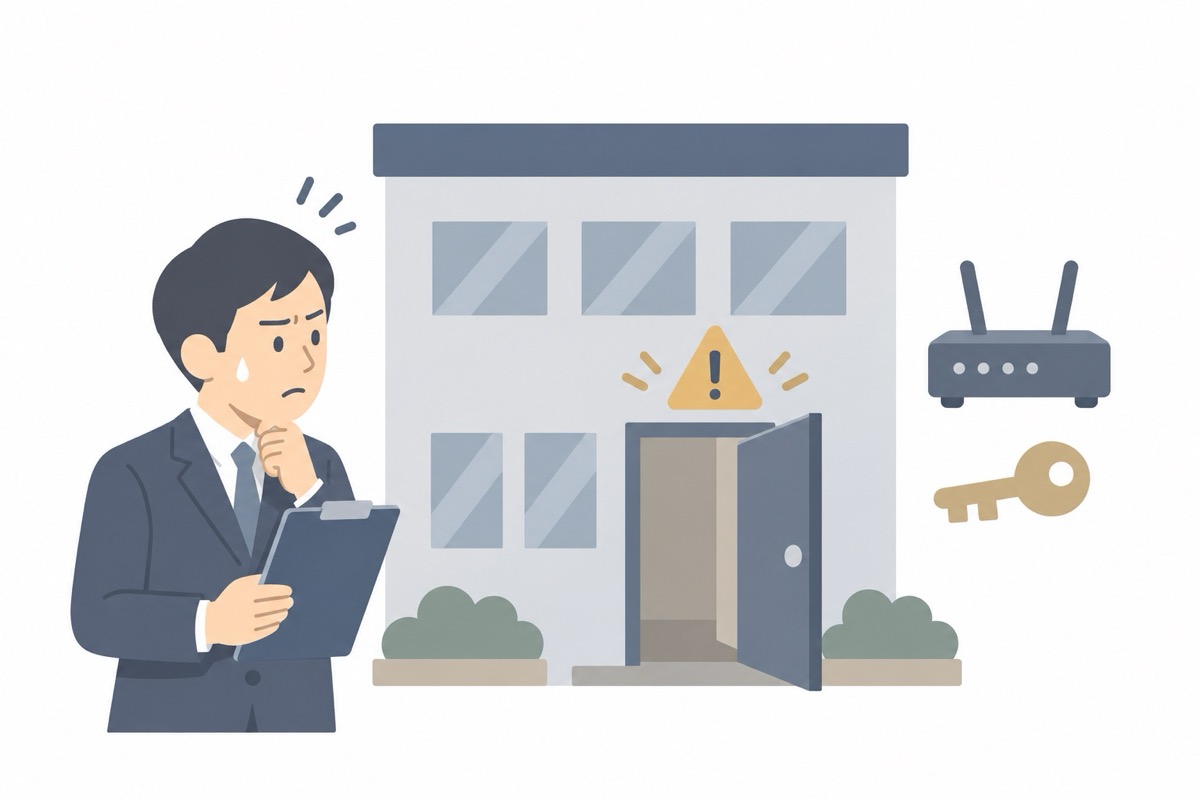
Who patches your public servers? How to find servers with no owner and build a simple responsibility matrix
The web agency “only built it”, the maintenance contract covers only the website content, and nobody looks at the OS or middleware. For managers and admin staff in companies without an IT department: questions that reveal servers with no owner, a RACI-style responsibility matrix (server, OS, middleware, CMS, certificates, backups), contract wording to check, and the cloud shared responsibility model in plain words.
Read →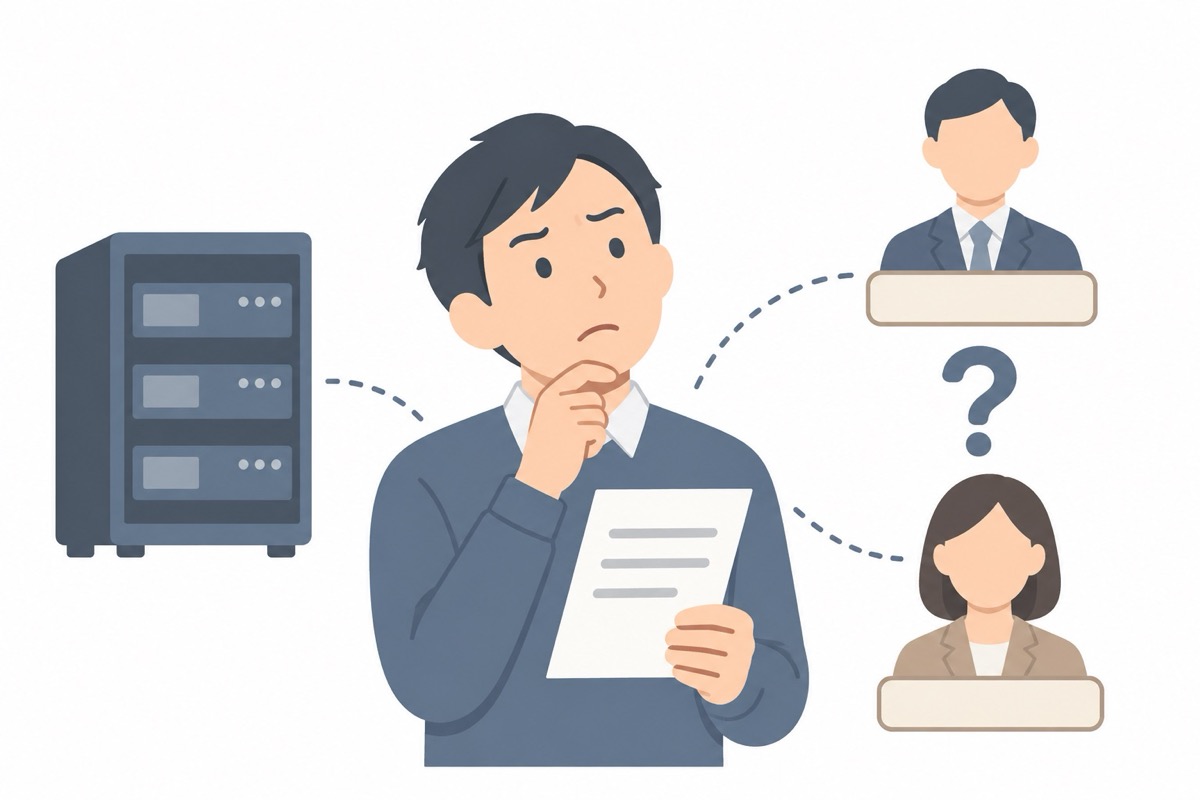
Is that old server still running? How to find and shut down “forgotten servers” left after a business transfer or site renewal
The FTP server that should have been closed, the old site, a campaign landing page, the server of a service you sold, a test environment. Servers nobody switched off keep vulnerabilities from years ago. We explain how to find them from three lists (invoices, DNS records, certificates), how to stop them in the right order from backup to cancellation, and how to record them in an asset register, for companies without IT staff.
Read →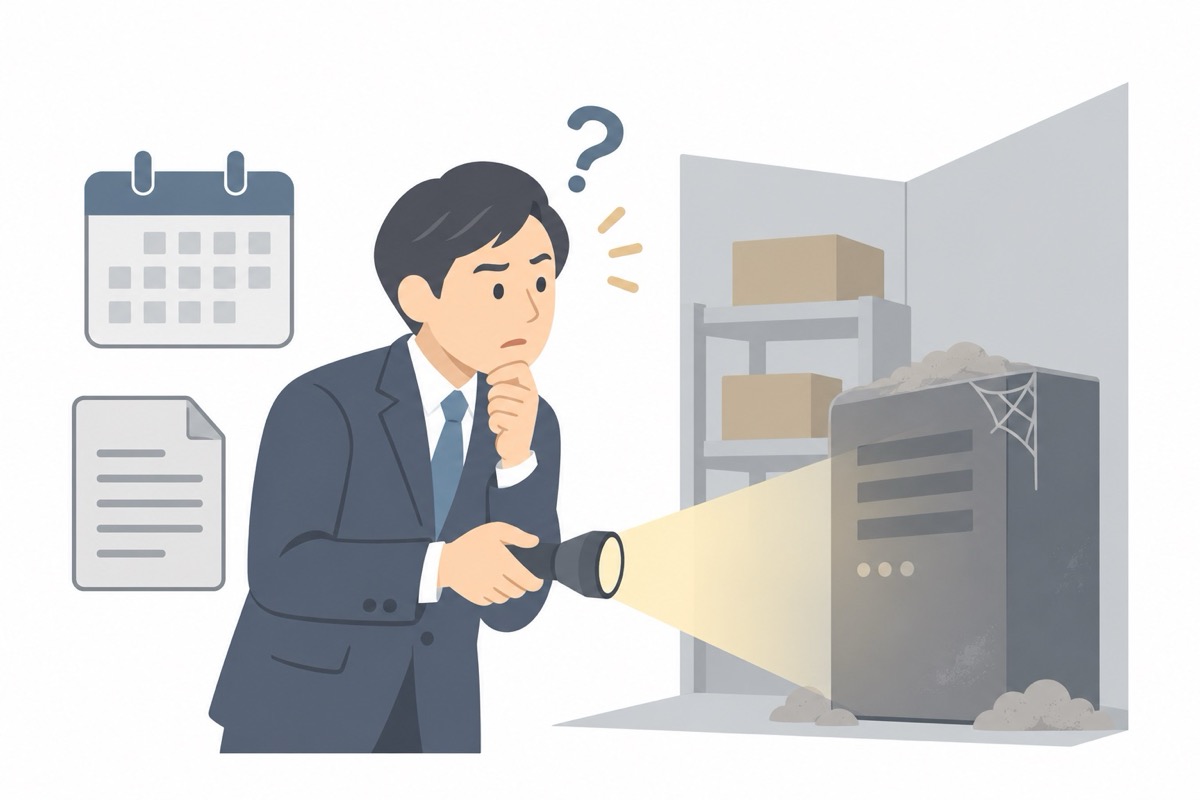
Are cloud keys and passwords left sitting on employee PCs? What leaks when a laptop is stolen or infected, and how to stop storing them
Cloud access keys, password spreadsheets, downloaded customer data and browser-saved passwords tend to pile up on employee PCs. We explain what leaks when a PC is stolen or infected by an infostealer, and how a company without IT staff can stop storing them (password manager, short-lived keys, disk encryption, remote wipe), with a checklist.
Read →
Is any storage still set to “public”? Checking cloud storage and share links
Object storage such as S3, public folders on hosting, and “anyone with the link” in Google Drive or OneDrive. Storage that was made public “just once” and never switched back can be read by anyone without logging in. For companies without IT staff: how to find it (admin sharing reports, S3 Block Public Access, Workspace / Microsoft 365 sharing settings), how to fix it, and how to set defaults that stop it happening again.
Read →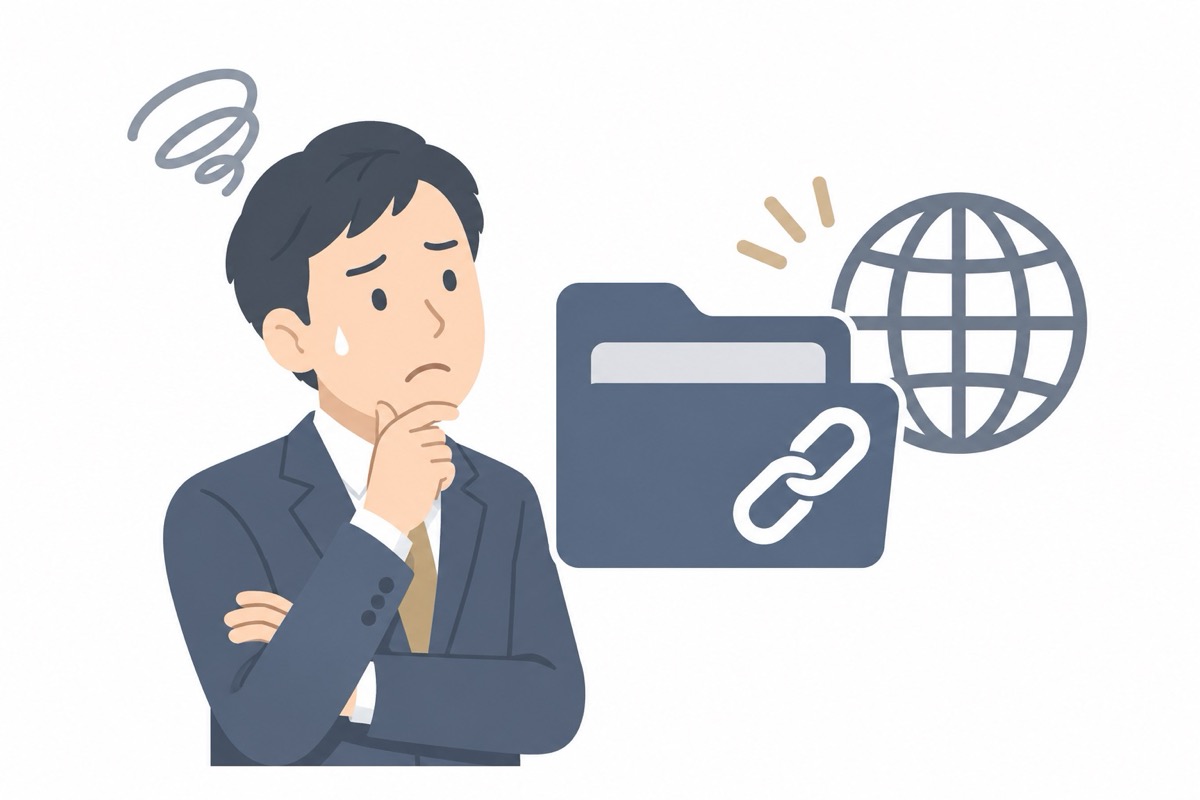
How many SaaS tools does your company use? An inventory for two-step verification and IP restrictions
Accounting, attendance, chat, storage, CRM, forms. When you count the cloud services (SaaS) your company uses, there are usually more than you expect. For companies without IT staff: how to build a SaaS list from invoices and card statements, in what order to enable two-step verification and IP restrictions, how to cancel unused services, and how to handle accounts used by vendors.
Read →
Can you really restore that backup? The first drill for companies that have never tried a restore
You have backups but have never restored them, there is no procedure, and nobody knows how many days recovery takes. For such companies: RPO and RTO in plain words, and the steps of a yearly restore drill (choosing the target, restoring to a separate environment, what to check, how to record it, how to brief your vendor), based on Japan’s National Police Agency recovery statistics and AWS and Microsoft documentation.
Read →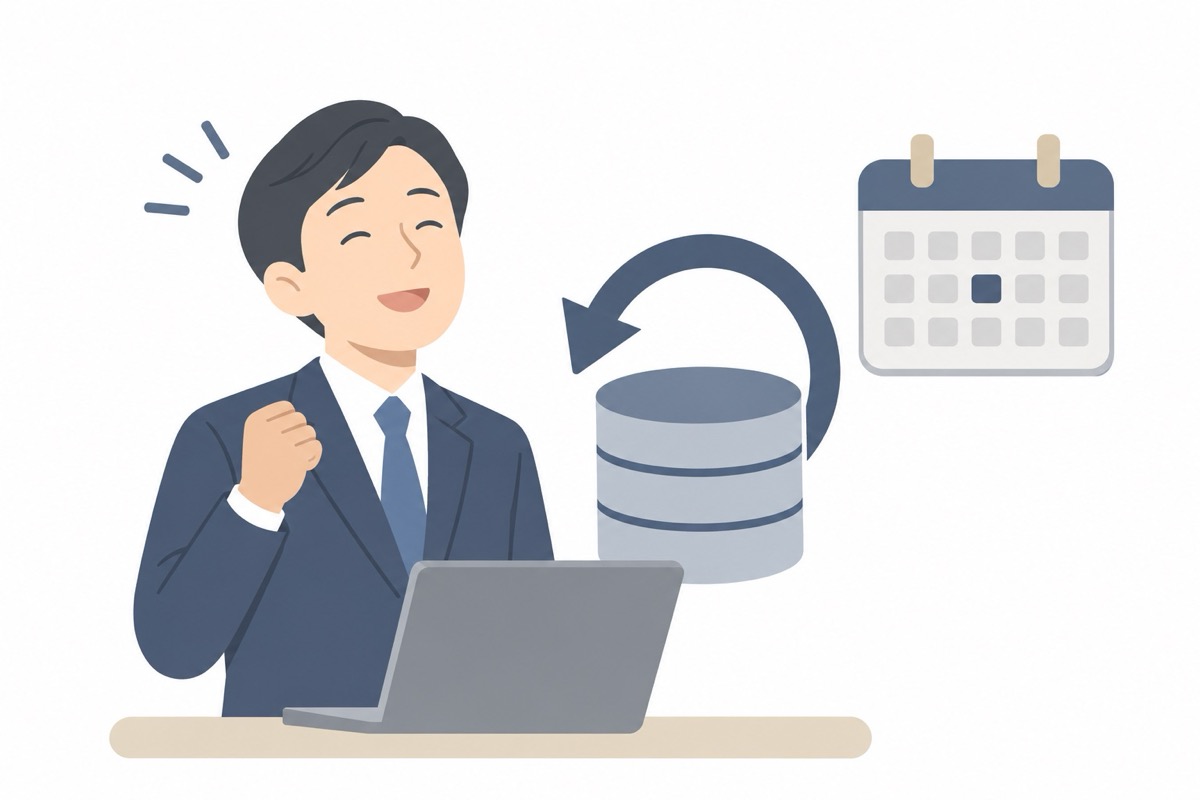
Is your SSH or Remote Desktop open to the whole world? How to check and close admin ports
Can anyone on the internet try to log in to your SSH (22), Remote Desktop (3389), database, FTP or mail port? For companies without IT staff: the questions to ask your vendor, the rules for checking from outside, and how to switch to IP restrictions, VPN, key authentication or a bastion host, based on Japan’s National Police Agency, AWS and Microsoft documentation.
Read →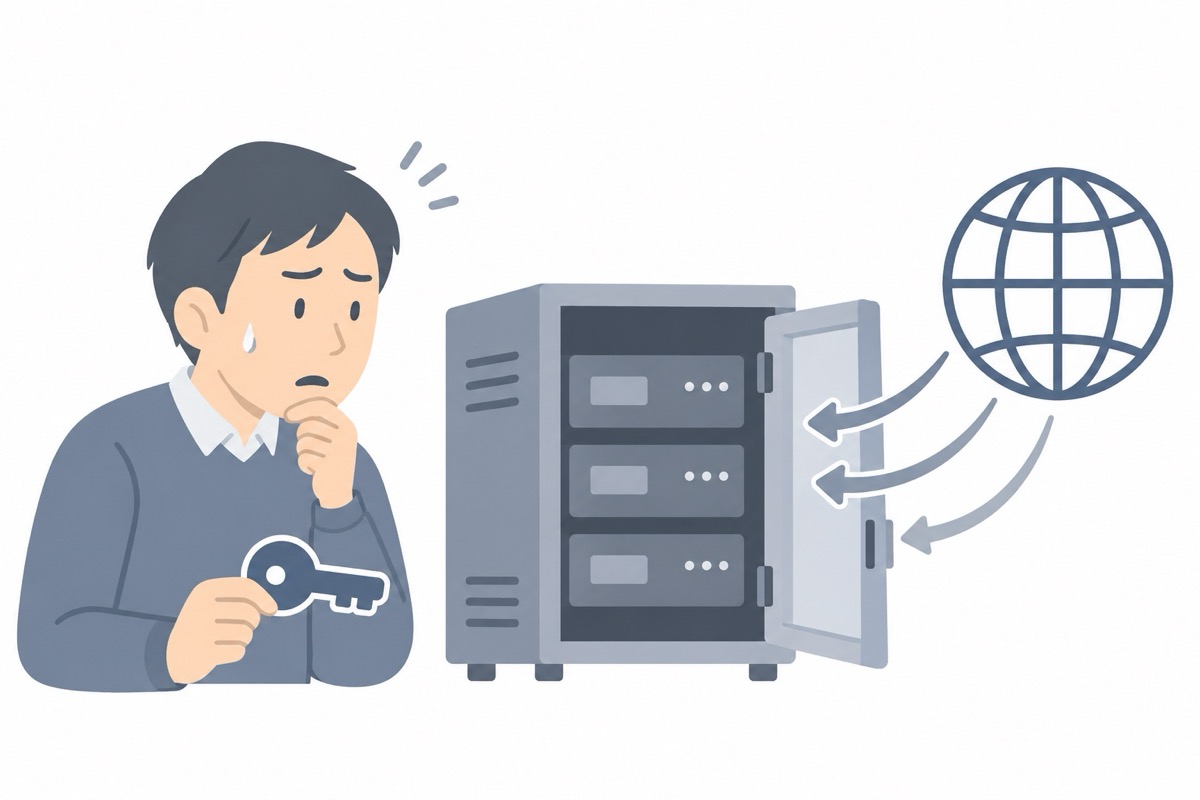
Is anyone signing in to your cloud console without MFA? Why it keeps slipping even after you fix it
You set up MFA (multi-factor authentication) for AWS, Google Cloud or Microsoft Azure admins, yet assessments often find new users, vendor accounts, the root user or an emergency shared account without it. For companies without an IT department, we explain the four places where MFA slips and a monthly check (credential report, organization-wide enforcement).
Read →
Do accounts of people who left or moved still exist? Review access rights once a quarter
Accounts of former employees, permissions that are too strong, and API keys or shared passwords that nobody owns do not show up in logs. For managers and admin staff at companies without an IT department, we explain a quarterly access review that matches HR records against accounts, in the order Google Workspace, Microsoft 365, cloud consoles, SaaS, shared folders and VPN.
Read →
Told your site’s jQuery is outdated? What is risky, how to fix it, and what can break
For companies told in an assessment that their jQuery is outdated: what is actually risky, how to check your version, what tends to break during an update and what to ask your web vendor. Includes the exploited CVE-2020-11023 and our own scan statistics.
Read →
Brotli vulnerability (CVE-2026-111497): JPCERT/CC alert, and how a compression library relates to your website
A vulnerability in Brotli, a library for compressing and decompressing data, can lead to a takeover just by making a system open crafted data. JPCERT/CC has issued an alert, and US CISA has confirmed exploitation. For companies without IT staff, we explain what a compression library is and how to check whether your site is affected.
Read →
CakePHP SQL injection (CVE-2026-119418 / 119419): what to check in custom-built business systems
Two SQL injection vulnerabilities that let attackers tamper with the database have been disclosed in CakePHP 5.4.3 and earlier, a PHP web framework. For companies without IT staff, we cover the conditions, how to tell whether your system uses CakePHP, and what to ask your developer.
Read →
Cisco ASA / FTD vulnerability (CVE-2026-76418) exploited: who keeps your firewall updated?
A vulnerability in the remote access VPN of Cisco firewalls (ASA and FTD) lets attackers restart the device from outside, and it is being exploited. For companies without IT staff, we cover which devices are affected, fixed versions, temporary mitigations and what to tell your maintenance vendor.
Read →
Gravity Forms vulnerability (CVE-2026-103039): check the plugin behind your WordPress contact form
A critical vulnerability (CVSS 9.8) that can be used without logging in has been disclosed in Gravity Forms, a paid WordPress form plugin. For companies without IT staff, we cover affected versions, how to tell whether you use it, what to do when the license has expired, and what to tell your web vendor.
Read →
Ivanti Connect Secure vulnerabilities (CVE-2026-104935 and others) exploited: what to do today if a vendor runs your VPN
Attackers are chaining three vulnerabilities in Ivanti Connect Secure, a VPN appliance for remote work. For companies without IT staff, we cover affected versions, why updating alone is not enough, recovery steps if you may be compromised, and what to tell your vendor.
Read →
Magento / Adobe Commerce vulnerability CVE-2026-48356 exploited: what to check if an agency runs your online store
CVE-2026-48356, a file upload vulnerability in Magento (Adobe Commerce), was added to CISA’s known exploited list on October 27, 2026. For companies without IT staff, we cover affected versions, why patched stores still need checking, and what to ask your web agency.
Read →
Can anyone open your files without logging in? How to find and fix “anyone with the URL can see it” pages
Quotes, application forms and uploaded documents are sometimes visible to anyone who has the URL, with no login. We explain typical “no authentication” URLs that leak data without any hacking, how to find them on your own site, how to fix them, and what to do when you find one, for companies without IT staff.
Read →
Will ransomware delete your backups too? How to build backups attackers cannot erase, with a checklist
Ransomware operators often delete backups before they encrypt anything. We explain why “we back up every day” is not enough, how backups that cannot be erased work (object lock, vault lock, offline copies), and a checklist that a company without IT staff can use.
Read →
Yamaha NWR100 and YMS-VPN8 vulnerabilities (October 2026): how to check if you are affected and what to do without IT staff
On October 28, 2026, vulnerabilities were published for Yamaha’s NWR100 wireless router, the YMS-VPN8 VPN client and the LAN Monitor installer. NWR100 includes an OS command injection rated CVSS 9.8. We cover affected versions, fixes, workarounds if you cannot update, and the order in which a company without IT staff should check.
Read →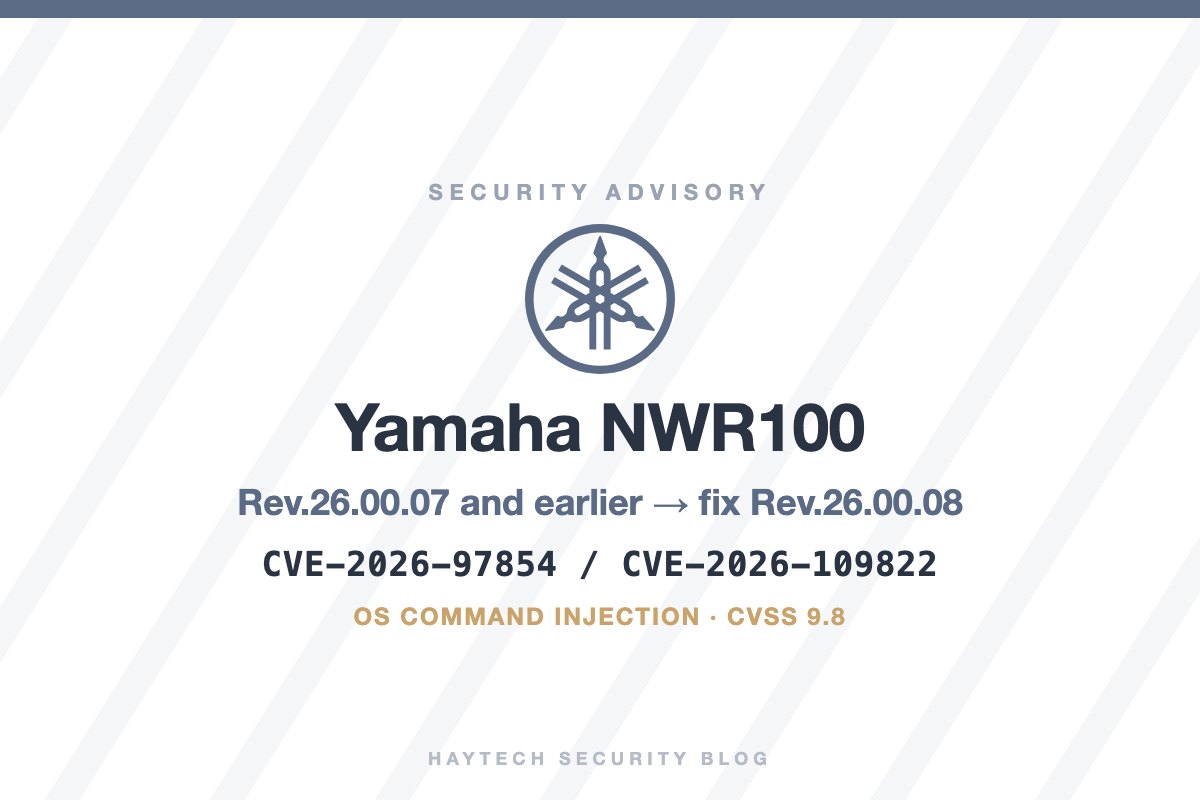
When personal data leaks: who to report to in Japan and Vietnam, and by when | PPC, Privacy Mark, MIC and Vietnam's Ministry of Public Security deadlines
When personal data leaks, Japanese companies report to the Personal Information Protection Commission (preliminary report in roughly 3–5 days, final report within 30 days), Privacy Mark holders to their assessment body, and telecom-type services to MIC. A Vietnamese subsidiary must notify the Ministry of Public Security (A05) within 72 hours under the Personal Data Protection Law in force since January 2026. One table of recipients, deadlines and individual notices, plus what to prepare now.
Read →
Three options when no fix will ever come for your website: static conversion, rebuild or shutdown, compared for companies without IT staff
Websites running on end-of-life PHP or CMS versions no longer receive fixes, even for critical vulnerabilities. A WAF or a temporary shutdown only buys time, so in the end you must choose one of three options: static conversion, rebuild or shutdown. Based on IPA advisories, we explain how to choose by site type, what you keep, the pitfalls and a checklist to run before deciding.
Read →
When your logs only go back 30 days: why you can no longer say “nothing leaked”, and how to keep a year of logs cheaply
Under Japan’s personal data law, even the “possibility” of a leak must be reported. Without logs you cannot show that nobody viewed the data, so you must assume the worst. We cover default retention on AWS, Google, Microsoft 365 and Vercel, which logs to keep and for how long, a cheap way to keep a year or more, and six signals to check weekly.
Read →
Personal data inventory and deleting what you no longer need: know what, how many, where and for how long in 30 days
How bad a breach is, and whether you must report it, depends on what you held and how much. For companies without IT staff, this guide covers Japan’s duty to delete data you no longer need, the My Number disposal rule and Vietnam’s new data protection law, then walks through the data people forget, where it hides, the inventory columns, a deletion rule and a 30-day plan.
Read →
The critical PHP vulnerabilities (CVE-2026-109618 / 109619, "PHP2Shell"): affected versions, fixes, and what to do with a site you cannot update, explained for companies without IT staff
Two critical PHP vulnerabilities (CVE-2026-109618 and CVE-2026-109619), disclosed on October 21, 2026, can allow unauthenticated remote code execution on your server, and CISA has confirmed exploitation. We cover affected versions, the fixed releases (8.5.12 / 8.4.27 / 8.3.36 / 8.2.35), what to do about PHP 8.1 and older, which have no official fix, and a step-by-step plan for companies without IT staff, based on primary sources from the PHP project, IPA and JPCERT/CC.
Read →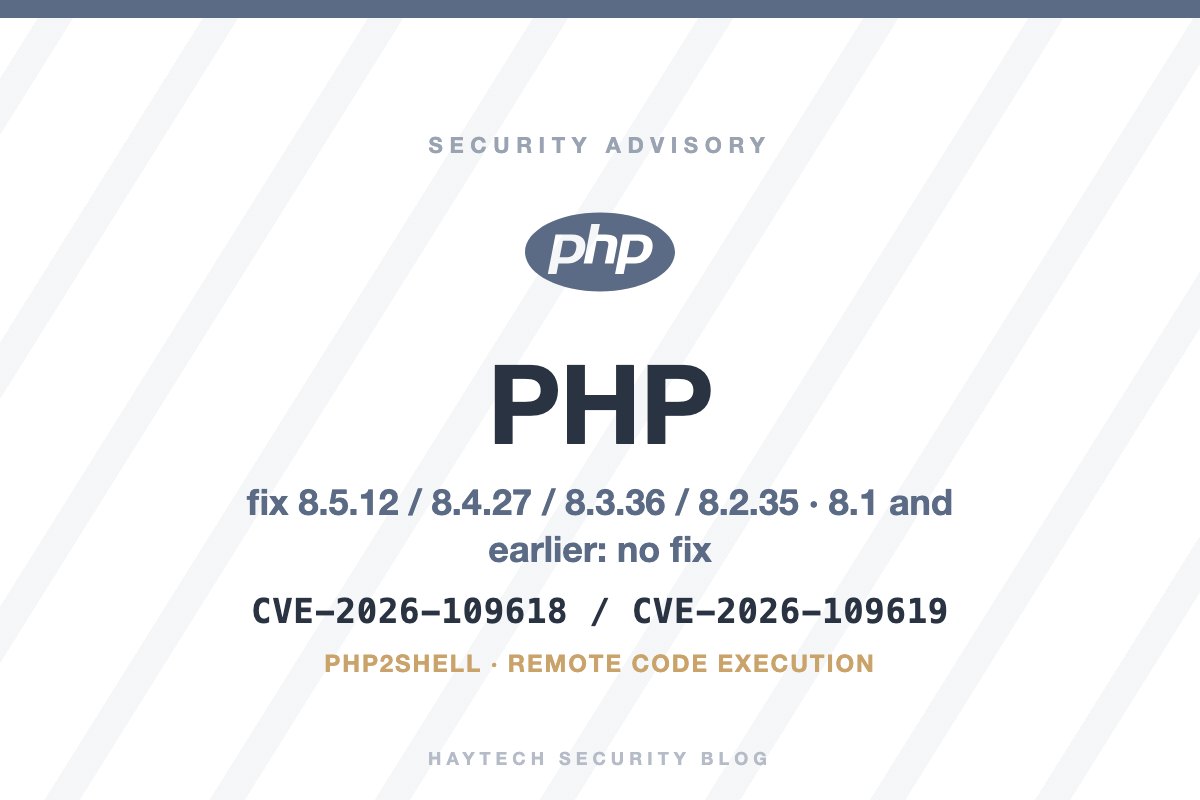
When your SaaS, web agency or partner is breached, who reports and who notifies? It depends on “entrustment” vs “third-party provision”
Mail-delivery SaaS, no-code site builders, booking systems, business partners. Even when the breach is not your fault, reporting to the regulator and notifying individuals can be your duty. We explain entrustment vs third-party provision vs joint use under Japan’s APPI, what to put in contracts, a SaaS inventory template, Vietnam’s Personal Data Protection Law, and a first-24-hours checklist.
Read →
When a cloud service you use is breached: what customers should do, based on the Onamae.com Desktop Cloud and Studio incidents
In October 2026, unauthorized access was announced at GMO Internet’s Onamae.com Desktop Cloud and the no-code web builder Studio. Based on their official notices, we summarize the facts and the steps customers should take even when they did nothing wrong: password changes and session termination, rotating API keys and webhooks, handling personal data collected via forms, contacting business partners, and preparing in peacetime.
Read →
EOL calendar, Nov 2026 – Dec 2027: major software reaching end of support, and what has already ended
As of October 26, 2026: what reaches end of support soon — Windows Server 2016 (January 12, 2027), PHP 8.2 and 8.3, Node.js 22, SQL Server 2017 — and what has already ended — Windows 10, Office 2016/2019/2021, Exchange 2016/2019, Windows Server 2012 ESU, PHP 8.1, CentOS 7 — each with an official source.
Read →
An EOL inventory guide for companies without IT staff: building the register, commonly missed devices and how to prioritize
How to find end-of-life (EOL) software and devices using IPA’s asset register template (Appendix 6) and MyJVN Version Checker — including commonly missed items such as VPN appliances, NAS, multifunction printers, vendors’ remote access, WordPress and server-side PHP — plus how to prioritize and keep the register up to date.
Read →
What is EOL (end of support)? The risks of staying on it and 5 ways to deal with it
What end of support (EOL) means and what happens if you keep using unsupported software, explained with primary sources from IPA, Japan’s National Cybersecurity Office and Microsoft, plus a real hospital case in Osaka. We compare five options: upgrade, migrate, ESU, isolate and WAF.
Read →
Three options for SMBs without an IT person: hiring, domestic outsourcing or offshore (Vietnam) outsourcing
For SMBs with no IT person — or one stretched across other duties — we compare hiring, domestic outsourcing and offshore (Vietnam) outsourcing by best fit, ramp-up and caveats, with questions to help you decide and steps to start small.
Read →
Automated attacks find small misconfigurations faster: lessons from the JPCERT/CC alert (updated Oct 23) and recent supplier-related incidents
On October 23, 2026, JPCERT/CC updated its alert on unauthorized access to Japanese organizations (JPCERT-AT-2026-0030) with attacks using AI penetration-testing platforms, including attempts against internet-facing WSUS servers. Together with a securities firm and a university case from the same period, we list checks a small company can do this week.
Read →
“We had MFA and still got taken over”: how Microsoft 365 token replay works, and what admins can check themselves
On October 22, 2026, security firm Huntress reported that 79 organizations using Microsoft 365 were compromised by attackers who stole and replayed tokens issued after MFA. We walk through the chain, from rogue device registration and MFA swaps to hidden inbox rules, and list what admins can check.
Read →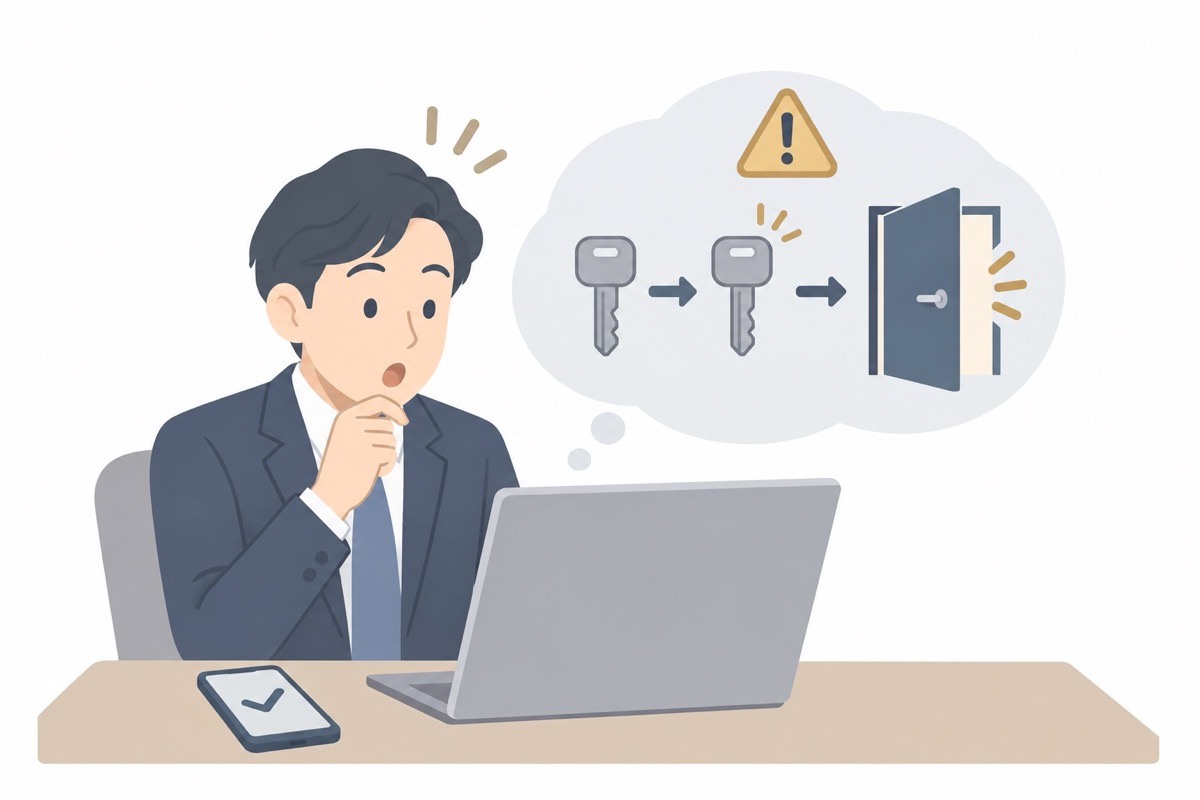
Information security checklist for outsourcing IT to Vietnam — from pre-contract to day-to-day operations
How to verify ISO/IEC 27001:2022 scope, certification body and expiry; NDAs and contracts; least-privilege access; designs that keep personal data out of the country; logs; offboarding; and subcontracting. A checklist for before and after you outsource IT overseas.
Read →
SiteGuard Server Edition vulnerability (CVE-2026-106931) under active exploitation: affected versions, fixes, and why you should save diagnostic data before updating
An OS command injection flaw (CVE-2026-106931) in SiteGuard Server Edition, a Japanese host-based WAF, can let attackers run commands as root/SYSTEM, and exploitation has been confirmed. CISA has added it to KEV. We cover affected versions, fixes, the patch and workaround, JPCERT/CC’s advice to collect diagnostic data before updating, checking for compromise, and why a WAF alone doesn’t make you safe.
Read →
Why outsource security and IT support to Vietnam? The reasons, the cases where it doesn’t fit, and what to watch
Japan’s IT talent gap, a 2-hour time difference, a large pool of Japanese learners and JLPT takers, Vietnam’s track record as an offshore destination, and its 2026 personal data protection law. We lay out the reasons with sources — and are honest about where it doesn’t fit.
Read →
It’s not just PHP: 12 critical security risks to check now (October 2026)
Beyond the PHP vulnerabilities that drew wide attention after the Prime Minister’s public call to act, critical updates were released the same week for GitLab, Next.js, Windows, nginx, Node.js and more. Based solely on official announcements, we list each one with its release date, fixed versions and primary-source URLs.
Read →